
 ChatGPT
 Gemini
 Claude
 Perplexity
 Copilot
 Deepseek
If your business imported goods into the United States between early 2025 and February 2026 and paid tariffs under the International Emergency Economic Powers Act (IEEPA), you are likely owed an IEEPA tariff refund.…
If your business imported goods into the United States between early 2025 and February 2026 and paid tariffs under the International Emergency Economic Powers Act (IEEPA), you are likely owed an IEEPA tariff refund. The U.S. Supreme Court struck down those tariffs as unconstitutional on February 20, 2026, and U.S. Customs and Border Protection (CBP) opened its refund portal on April 20, 2026. The total refund pool is estimated at $166 billion.
Most eligible importers have not filed yet. Getting your Trump tariff refund requires an active CBP portal account, a bank account linked for electronic payment, and a formatted data file. None of that is complicated. But refunds are not automatic.
Why IEEPA Tariff Refunds Exist
Starting in early 2025, President Trump used IEEPA to impose sweeping tariffs on goods from dozens of countries. IEEPA is a national emergency law that gives the president broad authority over international commerce, but its use for tariff-setting had never been tested at this scale. Multiple importers challenged the tariffs in federal court, arguing that Congress, not the executive branch, holds the constitutional power to set import duties.
On February 20, 2026, the U.S. Supreme Court ruled in Learning Resources, Inc. v. Trump that those IEEPA-based tariffs exceeded presidential authority. The decision was immediate: CBP was ordered to stop collecting the tariffs and to return what it had already collected. The estimated total is $166 billion, though some analyses put the figure as high as $175 billion depending on which entry categories are included.
To handle the volume, CBP built a new system called the Consolidated Administration and Processing of Entries (CAPE), layered on top of its existing Automated Commercial Environment (ACE) portal. Instead of processing refunds one import entry at a time, CAPE accepts batch declaration files covering up to 9,999 entries per submission.
Tariff Refund Eligibility: Who Qualifies and Who Doesn’t
The core rule of tariff refund eligibility is this: the entity that paid the IEEPA tariffs directly to CBP is the one that gets the refund. That means businesses, not individuals.
If a freight forwarder listed themselves as IOR, the refund technically belongs to them. Check your entry summaries.
If you used a freight forwarder who listed themselves as an IOR, the refund technically belongs to them, not to you. Check your entry summaries before assuming you are the IOR.
How to File a CAPE Portal Refund Claim: Step by Step
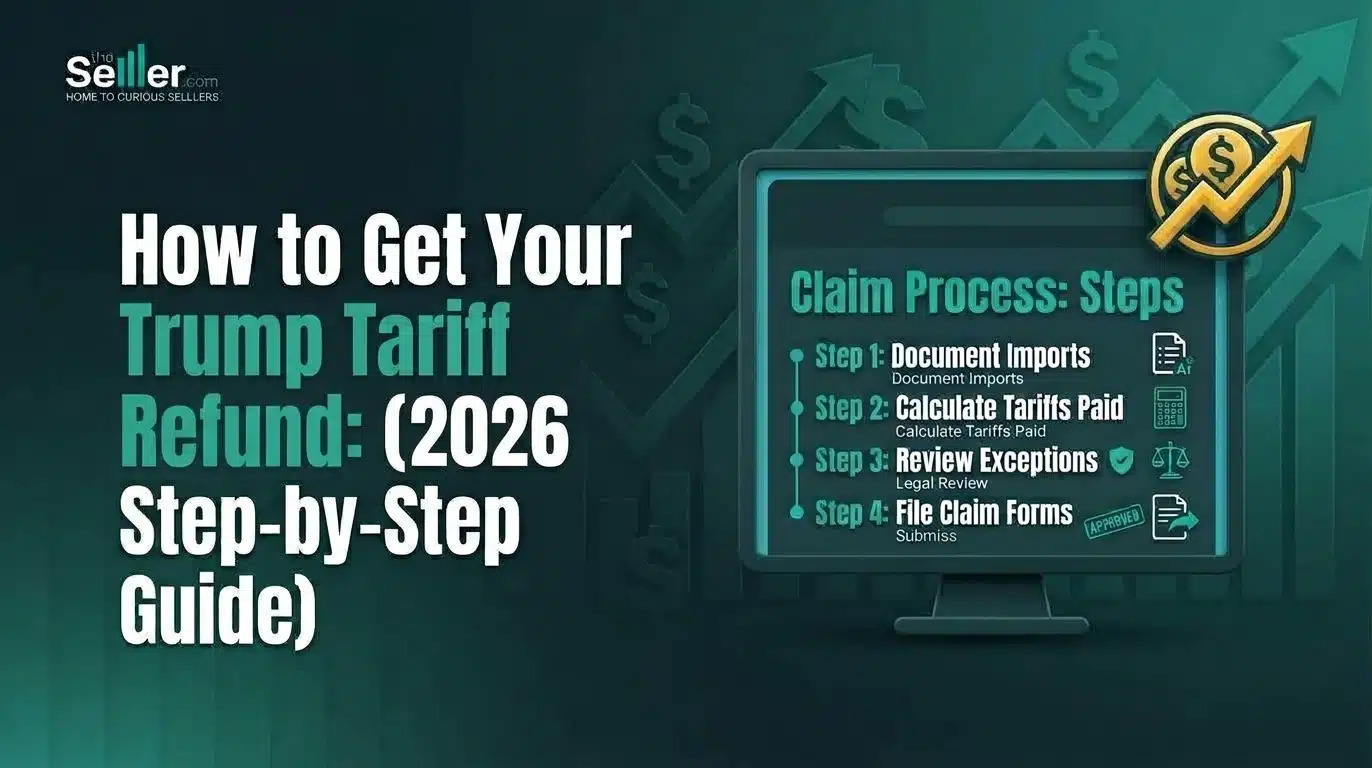
The CAPE portal refund filing process runs through CBP’s ACE Secure Data Portal at cbp.gov/trade/automated. Here is the sequence, including the parts most guides skip.
Step 1: Verify Your ACE Account
Log into your ACE Secure Data Portal account and check that your company’s Importer Record Information (CBP Form 5106) is current. Specifically, check the contact email address. CBP sends CAPE processing notifications to the email on file. If that address belongs to a freight forwarder or a former employee, you will miss approval notices.
Many businesses that haven’t used ACE in years find their credentials are expired or their account is locked. The fix is to contact CBP’s ACE helpdesk directly and request reactivation. This usually takes less than 24 hours. Do not skip this step: discovering a locked account after you have built your CSV file wastes significant time.
Step 2: Enroll Your Bank Account for ACH Payments
CBP cannot issue your refund without an active ACH bank account linked to your ACE account. Go to your Importer sub-account within ACE, find the ACH Refunds enrollment section, and enter your U.S. bank routing number and account number. There is no paper check option. If ACH is not set up, CBP will not process your payment regardless of whether your CAPE declaration is approved.
Step 3: Identify Your IEEPA-Eligible Entries
Run entry summary reports within ACE to pull every import entry from the IEEPA period (approximately April 2025 through February 20, 2026). Sort by tariff code and isolate entries that carried IEEPA duty codes. Remove any entries that also carried Section 301, Section 232, or antidumping duties on the same line. For importers with large volumes, a customs broker or trade attorney can run this analysis faster and with less risk of error.
Phase 1 covers two categories: unliquidated entries (where CBP has not yet finalized the duty calculation) and entries liquidated within approximately 80 days of the filing date. If you are unsure whether an entry is liquidated, check the liquidation status in your ACE account or ask your broker.
Step 4: Build and Format Your CAPE Declaration File
The CAPE system accepts .CSV files. One declaration can include up to 9,999 entry lines. CBP has published a template with the required field structure.
Key fields in the file include entry number, port of entry, import date, and IEEPA duty amount paid. The file must follow CBP’s exact column format. Errors in formatting are one of the most common reasons declarations are rejected on first submission.
Step 5: Upload via the CAPE Tab in ACE
Once your file is ready, log into ACE, open the CAPE tab, and upload the CSV. Do not submit through the Automated Broker Interface (ABI), which is a separate system used for entry processing. CAPE declarations must go through the CAPE tab specifically.
After upload, CBP generates a confirmation receipt. Save it. A processing dispute later needs that receipt to prove your submission date.
Step 6: Wait for CBP Review and ACH Payment
CBP’s review process works in two stages. First, CBP validates your entries against its records, which typically takes two to four weeks. Second, valid declarations move to the U.S. Department of Treasury for ACH payment authorization. Treasury began issuing its first payments on May 12, 2026. From the point CBP accepts your declaration, the standard timeline for funds reaching your bank account is 60 to 90 days. Complex claims or entries requiring additional documentation take longer.
Your CBP tariff refund includes statutory interest calculated on the duty amounts from the date of original payment. CBP applies it automatically.
Tariff Refunds If You Shipped via UPS, FedEx, or DHL
This is the question most guides don’t answer. If you imported goods through a major carrier and the carrier served as your Importer of Record, you may not need to file a CAPE declaration yourself. The carrier files on your behalf.
UPS has confirmed it is working with CBP to return IEEPA tariff payments to customers where UPS was the IOR. According to UPS, this covers eligible shipments beginning January 30, 2026. Customers whose entries UPS handles will receive refunds through UPS directly, not through the CBP CAPE portal. FedEx and DHL have indicated similar processes are in place, though the exact timelines vary by carrier.
The critical question is, was the carrier your IOR, or were you? Check your entry documentation. If your company name appears as Importer of Record on CBP Form 7501, you must file your own CAPE declaration. The carrier cannot file on your behalf in that scenario. If the carrier’s name appears as IOR, contact their customs brokerage division to confirm they are handling your refund and ask for an estimated timeline.
What to Do If Your Entries Are Already Liquidated
Liquidation is CBP’s process of finalizing an import entry, including the exact duties owed. Phase 1 of CAPE covers unliquidated entries and entries liquidated within approximately 80 days of the filing date. If your entries are older than that, you are not shut out, but the path is different.
The formal protest process under 19 U.S.C. 1514 is the standard CBP mechanism for disputing liquidated entries. You file a written protest identifying the entries and the legal basis for the refund. The 180-day window runs from the liquidation date, not from when you discover the error. Missing it forfeits your claim for those entries.
The Court of International Trade (CIT) is a federal court that handles trade and customs disputes. Some importers with large refund values have filed CIT cases directly, either instead of or alongside the CAPE process. CIT cases are slower and require legal representation, but they can address entries that fall outside both the CAPE Phase 1 window and the protest window. If you are sitting on a potential refund of several hundred thousand dollars or more, a conversation with a customs attorney is worth the cost.
Phase 2 of the CAPE program has not launched as of publication. Based on CBP’s public guidance, Phase 2 is expected to cover entries currently excluded from Phase 1, primarily entries in reconciliation status and entries that are being protested through other channels. If you have entries in those categories, the most important thing you can do now is document everything: preserve entry summaries, duty payment records, and liquidation notices. That documentation is what Phase 2 filings will require, and gathering it after the fact adds weeks.
What If You’re an Individual Consumer?
You cannot apply for a tariff refund directly. Only the entity that paid customs duties to CBP is eligible to receive them back. When you bought a product at a store or online marketplace, you paid the retailer, not CBP. The retailer, or the importer upstream from them, paid CBP.
Trump repeatedly promised that Americans would receive rebate checks funded by tariff revenue, at one point stating, “Next year is projected to be the largest tax refund season ever, and we’re going to be giving back refunds out of the tariffs.” As of May 2026, no such mechanism exists. Congress would need to pass legislation to authorize direct payments to consumers. The Tariff Refund Act of 2026 would require refunds to importers but does not include consumer rebate checks.
According to CNBC estimates, U.S. households paid an average of $2,500 more in 2026 due to tariff-related price increases. Experts have been consistent that the likelihood of consumer dividend checks is, in the words of multiple economists, effectively zero.
Two paths exist if you want to pursue this as an individual.
The first is class-action litigation against retailers that charged tariff-inflated prices without passing on savings after the Supreme Court ruling. The second is indirect price adjustments: retailers like Walmart, Target, and Costco are receiving refunds and may lower prices, though they are not required to. Neither path is fast, and neither is guaranteed.
CBP Tariff Refund 2026 Timeline: What Has Happened and When to Expect Your Money
Watch Out for Tariff Refund Scams
CBP has stated explicitly there are no fees or charges to receive an IEEPA tariff refund. The CAPE portal is free. Processing is free. ACH payment is free.
Since the CAPE portal launched, a number of third-party services have contacted importers offering to file their claims for an upfront fee or a percentage of the refund. Some of these are legitimate customs brokerage services that are offering to manage the process on your behalf, which is a reasonable service that some importers genuinely need. Others are scams, charging fees and providing nothing in return.
The distinction: a legitimate customs broker files through the official CBP CAPE portal using your ACE account, charges a flat service fee or hourly rate, and can show you the submission confirmation. A scam operation asks for money upfront, may request your ACE login credentials, and cannot produce official CBP documentation. If you are unsure, contact CBP directly at cbp.gov before engaging any third-party service.
What Importers and Small Businesses Should Do This Week
Start with your ACE account. Log in, verify your contact email, and confirm your ACH bank details are enrolled. If your account is dormant, start the reactivation request today. From there, run your entry summary reports, pull out your IEEPA entries, and build your CAPE CSV file.
The Phase 1 window is open. Entries liquidate on a rolling basis, which means the 80-day window is actively shrinking for some of your shipments. Every week you delay is a week closer to those entries moving out of CAPE territory and into the slower protest process.
Frequently Asked Questions
Can individual consumers get a Trump IEEPA tariff refund?
No. Only Importers of Record who paid IEEPA duties directly to CBP are eligible. Individual consumers paid retailers, not CBP, so there is no direct refund mechanism for individuals. The Trump dividend check proposal has not passed Congress and has no confirmed timeline.
Which tariffs are NOT eligible for a refund through the CAPE portal?
Section 301 tariffs (the China trade war tariffs imposed since 2018), Section 232 tariffs (steel and aluminum), and antidumping and countervailing duties are all outside the scope of the Supreme Court ruling. Only IEEPA-specific tariffs qualify. Including ineligible entries in your CAPE CSV will cause those entries to be rejected.
I shipped via UPS or FedEx. Do I need to file myself?
It depends on who was listed as the importer of record on your entry documents. If the carrier served as IOR (common with small parcel shipments), the carrier handles the refund process on your behalf. If your company were the IOR, you would have to file your own CAPE declaration. Check CBP Form 7501 for any shipment from the IEEPA period to confirm.
What if my entries were liquidated more than 80 days ago?
You can still pursue a refund, but not through CAPE’s Phase 1 process. File a formal protest under 19 U.S.C. 1514 within 180 days of the liquidation date. If that window has also passed, you would need to pursue the Court of International Trade route, which requires customs legal counsel.
Will my tariff refund include interest?
Yes. CBP calculates statutory interest on the IEEPA duty amounts from the date of original payment. Interest is applied automatically when your CAPE declaration is approved. You do not need to separately request it.
How long does it actually take to receive a CBP tariff refund?
For straightforward unliquidated entries, CBP’s review takes two to four weeks. Once approved, Treasury issues ACH payment, and the standard total timeline from successful CAPE submission to funds in your bank account is 60 to 90 days. Entries that require additional CBP review or that involve reconciliation issues take longer. The first payments from the May 12, 2026 ACH batch began reaching accounts shortly after that date.
Is it legitimate for a company to charge a fee to file my tariff refund?
CBP itself charges nothing. But customs brokers and trade attorneys can legitimately charge service fees to manage the filing process on your behalf. A legitimate service uses official CBP channels, files under a power of attorney, and can show you official submission documentation. Any company asking for your ACE password or requesting a percentage of your refund as payment upfront warrants serious scrutiny.
Can I file a CAPE declaration AND a formal protest on the same entries?
No. For entries eligible under Phase 1, CBP expects you to use CAPE. Filing a formal protest on those same entries creates duplicate claims and can delay your refund. Use CAPE for Phase 1-eligible entries. Use the protest process only for liquidated entries outside the Phase 1 window.
📬 Get The Selller Weekly
Ecommerce insights every Thursday. No fluff, just what matters.